Tutorial
Objective
The player with the most cards of their color once the board is full wins the game.
Acquiring Cards
First and foremost — players need cards! Head to Free Cards to grab a free set of 12 cards, and if you like the game you can buy some packs on the Card Packs page.
Basic Gameplay
Each player takes turns placing cards on the board. When a card is placed on the board it enters the game as the color of that player.
When a card (card A) is placed adjacent (up, down, left, right) to another card (card B), they compare the numbers on the sides that are touching. If card A has a higher number than card B, then card B is captured and becomes card A's color. If card A has an equal or lesser number, card B keeps its color.
Blue plays a card...
→
...and captures!
The touching sides are compared: Blue's 7 beats Red's 3, so the card flips to Blue's color.
Players take turns placing cards until the board is full. Then the player with the most cards under their control wins the game!
One quirk of the standard 3x3 mode: the last card left in a player's hand still counts as theirs. So if you control 5 cards on the board while your opponent controls 4 plus the card still in their hand, the game ends 5–5 — a tie.
The Board
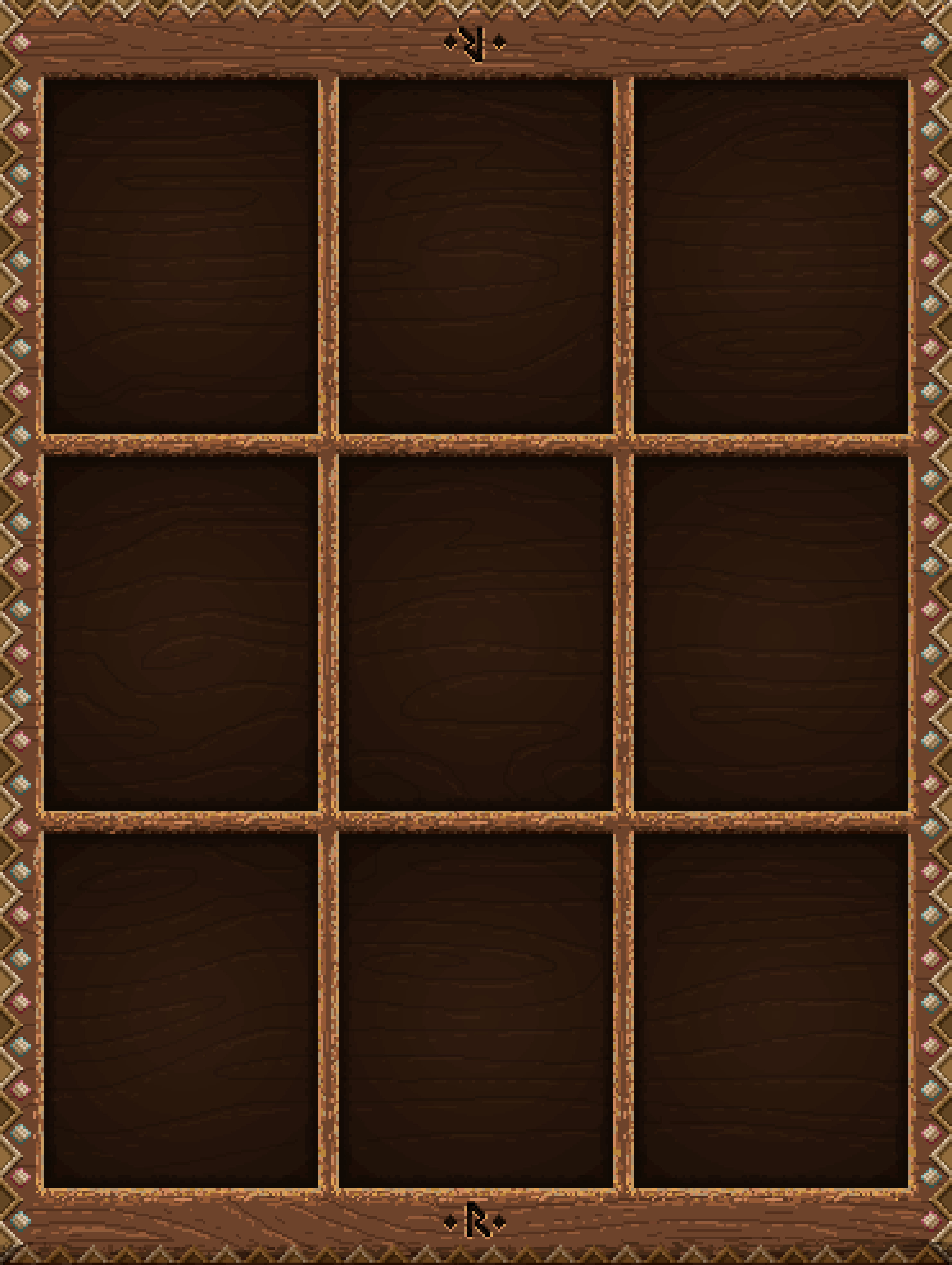
The game is played on a 3x3 grid where players take turns placing cards from their hand.
The players' hands are displayed on the left and right, so each player can see how many cards their opponent has left.
Above the board there is a running score — the left number is player A's score, the right number is player B's.
Card Anatomy
Cards have the following attributes:
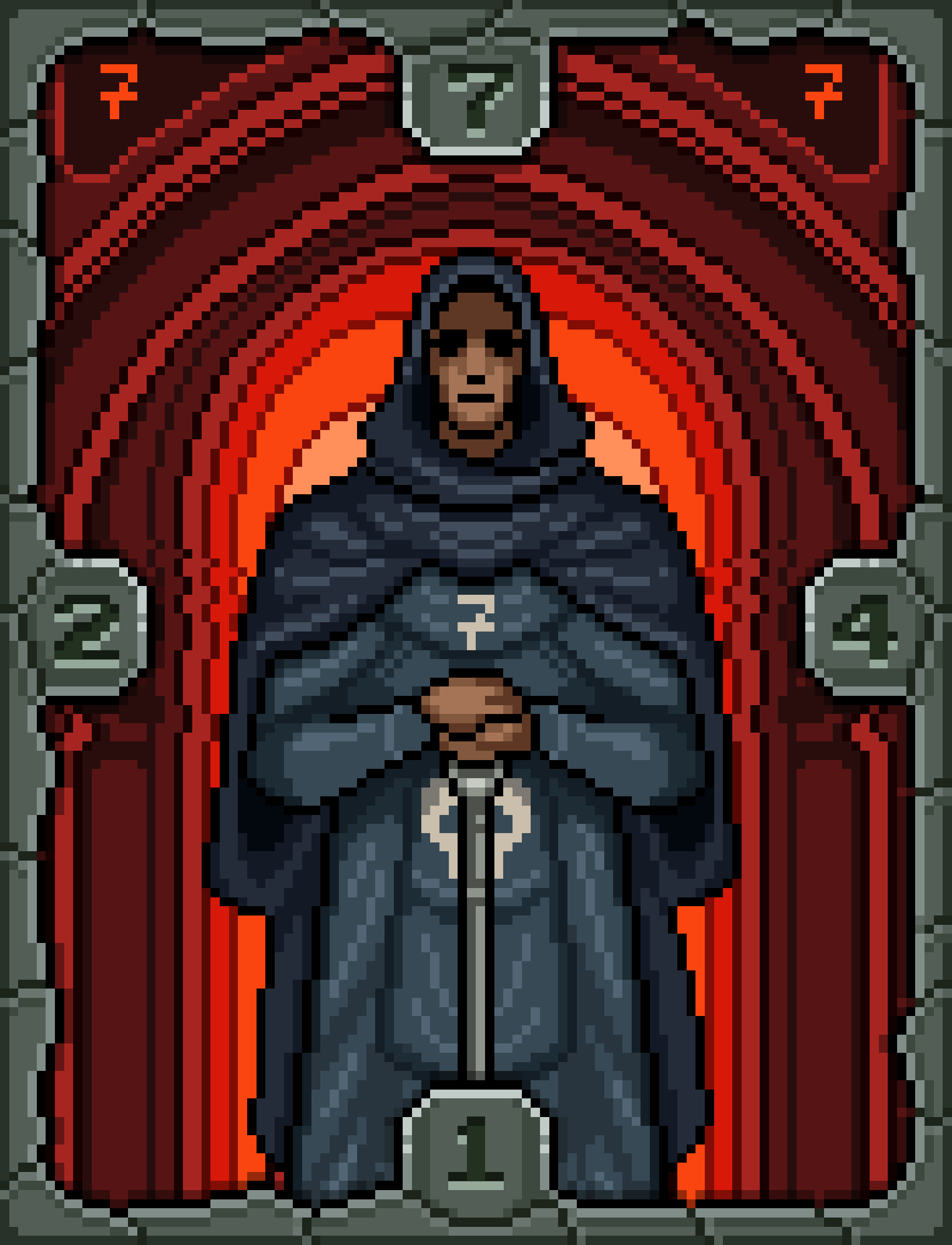
- Directional Power: each card has a Top, Bottom, Left, and Right power value. These values determine how cards interact when placed next to each other on the grid.
- Coming Soon: Elemental Affinity, Abilities, and more...
Game Setup
Prior to beginning the game, the lobby creator decides on a few of the rules for the game, like the Potency Cap, Play Timer, Board Size, and Required Wins.
Once the lobby is created and the players have joined, each player selects the cards to play with from their pool. A player's card pool consists of cards that they own, so signing in is required.
Once both players select their cards, the game begins! The creator of the lobby always goes first. If more than one win is required to take the match, first move alternates between the two players each game.
Potency Cap
Naturally, some cards in Runes are more powerful than others. To keep games fair, every card has a Potency value related to its strength — the stronger the card, the higher its potency.
The lobby creator sets a Potency Cap before the game. When players select their cards, the total potency of their selection must be equal to or less than the cap.
Play Timer
The Play Timer is an in-game timer that ensures players make moves in a timely fashion. It has two parts: Turn Time and Float Time.
Turn Time is a flat 30 seconds each player gets when it becomes their turn. Once it runs out, the timer starts counting down from their Float Time.
Float Time is a 90-second reserve that a player can dip into on any turn where their Turn Time runs out.
If a player exhausts both their Turn Time and their Float Time, a random card is played from their hand to a random spot on the board.
Board Size
The standard format for Runes TCG is played on a 3x3 grid, but we are experimenting with new modes, including a 4x4 grid!
On the 4x4 board, players select decks of 15 cards (or 12 in the lower-variance 12-card variant) that they draw from throughout the game. The player who moves first starts with 4 cards and doesn't draw; the player who goes second starts with 3 and draws one. Both players then draw a card at the start of each of their turns.
Required Wins
This is a fancy way of saying "Do you want to play best 2 out of 3?"
Required Wins determines how many wins a player needs to take the match. Ties are possible in Runes, and tied games don't count toward either player's total.
First move alternates each game, and the first player to reach the required number of wins takes the match!
Game Modes
There are several ways to play Runes: online lobbies against other players, practice matches against the AI, local pass-and-play on one device, and tournaments (covered in the next section).
Online Lobbies
The classic way to play — create or join a lobby on the Play page and face another player in real time. The lobby creator picks the rules (potency cap, play timer, board size, required wins) described above.
Games are synchronized live, and anyone can watch an ongoing match as a spectator.
Play vs AI
Want to practice without pressure? Head to Play vs AI and challenge one of three opponents: the Apprentice (easy), the Adept (medium), or the Archmage (hard). Each plays smarter than the last — the Archmage weighs captures, defends its weak sides, and fights for board position.
The AI plays fair: it can't see your hand, and it builds its own hand to match the strength of yours. You choose the board size, best-of series length, and who moves first.
AI matches are a safe sandbox — results never count toward your record or the leaderboard, and you can leave or resume a session at any time.
Pass and Play
Play a friend on the same device with Pass and Play. Set up the match (names, board size, potency cap, best of 1/3/5), then take turns passing the device — a hand-off screen covers the board between turns so nobody peeks at the other player's hand.
Both players pick their cards from the signed-in account's collection, and there's no turn timer — it's couch play. Results are local only and don't affect your online record.
A "Hide Hand" button lets the active player flip their own cards face-down so you can study the board together, and an in-progress match survives a page refresh.
Tournaments
Tournaments run on the Tournaments page. Entry requires a Discord account linked to your profile — pairings are announced on Discord and it's how we reach you when your match is ready.
Once you're paired, a lobby is created for your match automatically. Open matches waiting on you also show up in the "Your Games" panel on the homepage, along with any deadline you're up against.
Formats
Swiss: everyone plays multiple rounds and nobody is eliminated. As matches finish, you're automatically paired against an available player with a similar record. The final standings rank players by their results.
Single-elimination bracket: win and you advance, lose and you're out, until a champion wins the final. Brackets are seeded — by standings from a qualifying Swiss event, by players' tournament records, or completely at random — and top seeds get first-round byes when the field isn't a power of two.
Each tournament sets its own match rules: required wins, potency cap, board size, and whether the live play timer is used.
Tournament Timers
Tournament matches are played asynchronously over days, not minutes, so deadlines are enforced to keep events moving. All of these countdowns are visible in the match lobby and on the homepage.
Selecting cards: once your match is created, you have 24 hours to pick your cards or you forfeit that game.
Taking turns: you get 12 hours per turn. Beyond that you start burning your float — a 24-hour reserve pool per game that only depletes on time used past the 12-hour turn window.
If your turn fully expires, the first miss auto-plays a card for you; a second miss forfeits the game. Between games, the lobby owner has 12 hours to start the next game before it advances automatically.
Discord reminders go out about an hour before a deadline hits, so keep notifications on.
Card Restrictions
Some tournaments restrict which cards you can play — for example, a beginners-only event. Restrictions can limit cards by rarity, by a specific card list, or by potency values, on top of the usual potency cap.
You'll see a tournament's restrictions on its join dialog and detail page before entering. During card selection, ineligible cards are hidden and saved decks containing them are disabled, so you can't accidentally break the rules.
Card Skins
Card skins are approved community-created art variants for existing cards. They change how your cards look — never their stats or power.
Browse and buy skins in the marketplace, or submit your own artwork. For the full details on using, submitting, and managing skins, see the skin guide.